How to Test Your Home for Radon
Understanding Radon and Why Testing Matters
Radon is a naturally occurring radioactive gas that comes from the decay of uranium in soil, rock, and water. It is colorless, odorless, and tasteless, which makes it impossible to detect without proper measurement. When radon seeps into a home through cracks in the foundation, gaps around pipes, or other openings, it can accumulate to levels that pose a health risk. Prolonged exposure to elevated radon levels is a leading cause of lung cancer after smoking, which is why testing your home is a sensible step for any homeowner.
The good news is that radon testing is straightforward and affordable. You can choose from several types of radon measurement devices, each with its own strengths and best-use scenarios. Understanding the differences between them helps you pick the right approach for your situation and get reliable results.
Short-Term vs. Long-Term Tests
Radon tests fall into two main categories: short-term and long-term. A short-term test typically lasts from two to seven days. It gives you a quick snapshot of radon levels in your home, which can be useful if you need results fast, such as during a real estate transaction. However, because radon levels can fluctuate daily and seasonally, a short-term test may not reflect your average exposure over time.
A long-term test runs for three months to a year. It measures radon over a longer period, smoothing out daily and seasonal variations to provide a more accurate picture of your year-round exposure. Health guidelines generally recommend long-term testing for the most reliable assessment. If you are testing for peace of mind and want the truest reading, a long-term test is the better choice.
Types of Radon Measurement Devices
Passive Devices
Passive devices do not need power and are left in place to collect radon over a set time. They are simple to use and typically the most affordable option. Common passive devices include:
- Charcoal canisters: Used for short-term tests, they absorb radon and are sent to a lab for analysis.
- Alpha track detectors: These use a special film that records alpha particles released by radon decay. They work well for both short-term and long-term tests, though they are most common for long-term monitoring.
After the test period, you mail the device to a laboratory, which analyzes it and sends you a report. The process is reliable when you follow the instructions carefully.
Active Devices
Active radon monitors are electronic devices that plug into a wall outlet and continuously measure radon levels. They provide real-time readings and can log data over days, weeks, or months. Because they use a pump or fan to draw air across a detection chamber, active monitors are generally more sensitive and can detect smaller changes. They are also more expensive upfront but can be reused for multiple tests. Some homeowners prefer them because they get results immediately without mailing anything to a lab.
The trade-off is cost and setup. Active monitors require a power source and may need calibration to stay accurate. For most homeowners, a passive alpha track detector used for a long-term test offers the best balance of accuracy, affordability, and ease.
Where and How to Place Your Test
Proper placement is critical for a valid result. Follow these guidelines:
- Place the test in the lowest livable level of your home, such as the basement or first floor, where radon levels are typically highest.
- Keep the test away from drafts, direct sunlight, heat sources, and high humidity. Do not place it near windows, exterior doors, or vents.
- Set the test in a room that you use regularly, like a family room or bedroom, not in a closet or unused area.
- For short-term tests, seal all windows and doors during the test period and avoid operating ceiling fans or air conditioners that bring in outside air.
- Leave the test undisturbed for the full duration specified by the manufacturer.
If you are conducting a home radon test during a real estate transaction, the testing guidelines may be stricter. The seller and buyer typically agree on a test location and protocol to ensure the results are accepted by both parties. In those cases, hiring a certified radon measurement professional can be wise, but the basic principles of placement still apply.
When to Test
Radon levels tend to be higher in cooler months when windows and doors are closed and the home is sealed tight. Winter and early spring are often considered the best testing seasons because they capture the worst-case scenario. However, you can test at any time of year as long as you follow the instructions for keeping windows and doors closed during the test period.
If you test in warm weather, be aware that open windows and running fans can dilute radon levels, giving you a falsely low reading. For that reason, a long-term test that spans both cold and warm months gives the most balanced view.
Understanding Your Results
Results from a home radon test are reported in picocuries per liter (pCi/L). The U.S. Environmental Protection Agency recommends taking action if your result is 4 pCi/L or higher. Even if your result is below that threshold, reducing radon further can lower your long-term risk. Many homeowners choose to install a radon mitigation system if their levels are above 2 pCi/L, especially if they have children or spend a lot of time in the basement.
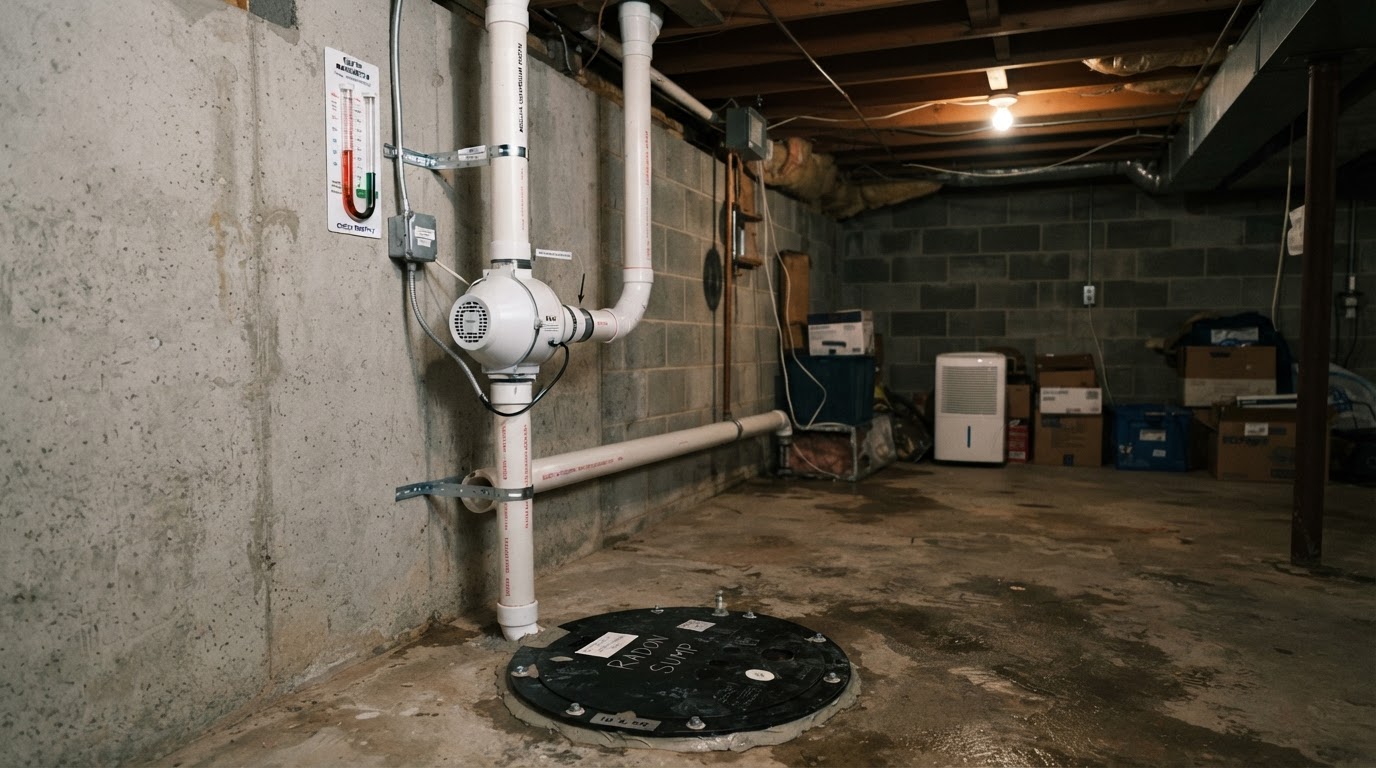
If your test comes back high, do not panic. Radon problems are fixable. A mitigation system usually involves a vent pipe and fan that pull radon from beneath the house and release it safely outside. The cost varies depending on your home's construction, but it is a permanent solution that brings levels down significantly.
Retesting Frequency
After you have mitigated radon, retest to confirm the system is working. After that, retesting every two years is a good habit. Radon levels can change over time as the soil shifts, the foundation settles, or your home's ventilation changes. If you remodel your basement or make changes to your heating and cooling system, it is wise to test again.
For homes that have never been tested, there is no time like the present. A simple, low-cost test can give you peace of mind or alert you to a problem that needs attention. Radon is a serious health concern, but it is also one you can manage with the right information and a little effort.
Remember that a home radon test is only the first step. What matters most is what you do with the results. If levels are elevated, take action. If they are low, you have the reassurance that your family's air is safe. Either way, testing is a small investment for the health of your household.